Negative Air Pressure in Mold Remediation, Explained Simply
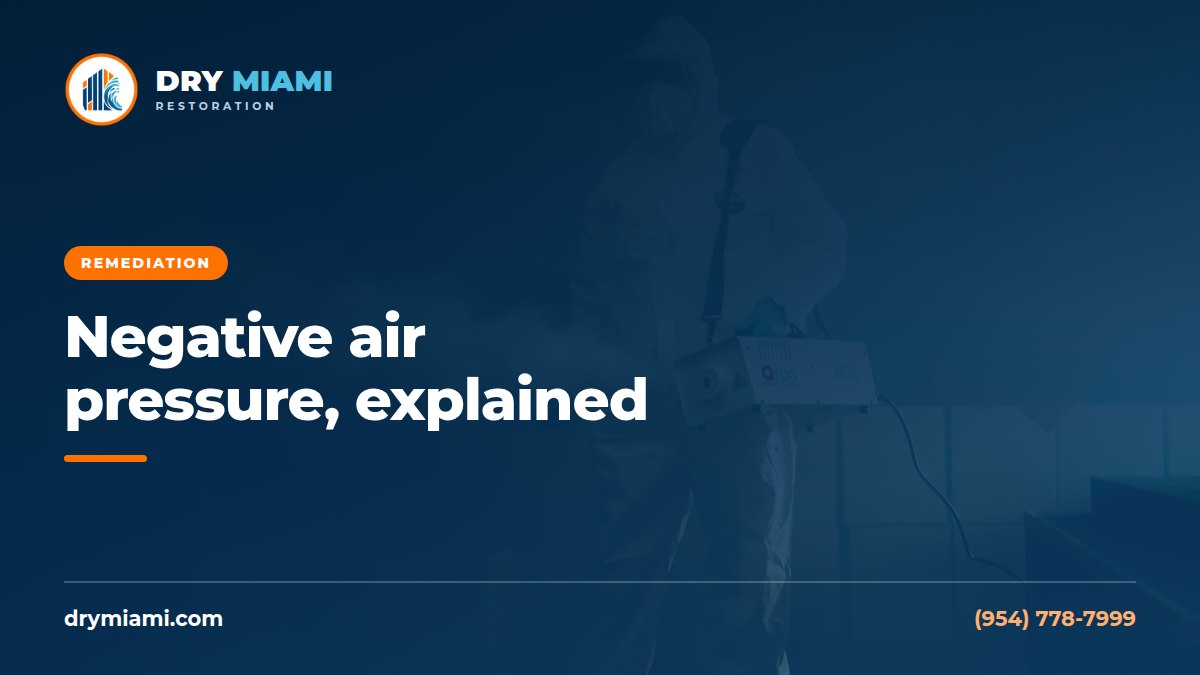
Negative air pressure sounds like something out of a laboratory, but the idea is simple enough to explain with a kitchen. Turn on a strong range hood, crack a window, and you can feel air being drawn in through the gap. The hood is pushing air out, so the room pulls replacement air in from wherever it can. Mold remediation uses the same effect on purpose, so that anything floating in the work area stays there instead of spreading through the rest of the home.
The problem it solves
Removing moldy drywall, cabinets or flooring sends spores and fine dust into the air. Air inside a home is never still: the AC cycles, doors open, people walk through. Without control, that dust follows the air currents into bedrooms, closets and ductwork, and a problem that started behind one bathroom wall ends up as a thin layer of contaminated dust across the whole unit.
Plastic sheeting alone slows this down, but no plastic barrier is perfectly sealed. There are always small gaps at the floor, around the zipper door, where tape meets textured paint. The question is which direction air moves through those gaps. Negative pressure answers it: inward.
How a crew sets it up
The setup has three parts working together.
- Containment. The work area is enclosed with plastic sheeting from floor to ceiling, with a zippered or flap entry. AC supply and return vents inside the enclosure are sealed so the system cannot pull dust into the ducts.
- A HEPA-filtered exhaust. A machine inside or at the edge of the containment pulls air through a HEPA filter and sends it out of the enclosure through a flexible duct, ideally to the outdoors through a window or door panel.
- A controlled inlet. Replacement air has to come from somewhere. A small opening or filtered flap, usually at the entry, lets clean air from the home flow in so the machine is not fighting a sealed box.
Because more air leaves than enters freely, pressure inside drops slightly below the rest of the house. The difference is tiny, far too small to feel in your ears, but enough to decide which way every leak flows.
How to tell it is working
You can check the basics without any instruments:
- The plastic bows inward. Walls of the containment should pull gently toward the work area. Plastic that billows outward means the area is under positive pressure, which is the opposite of what you want.
- The entry flap is drawn in. A loose flap or a strip of tape at the door should lean into the enclosure.
- The exhaust duct is intact. Follow it from the machine to where it ends. Kinks, tears or a duct that simply dumps into the next room defeat the purpose.
- The machine stays on. Pressure exists only while the fan runs. It should run continuously until the area has been cleaned and cleared.
South Florida complications
Miami adds a few wrinkles that textbooks written for drier climates skip over.
Humid replacement air
Every cubic foot exhausted outdoors is replaced by air from somewhere else. If that replacement air is being pulled in from outside through gaps in the building, it arrives warm and wet, especially from June through October. A long job under strong negative pressure can raise indoor humidity and cause condensation on cold surfaces. Good crews balance the exhaust rate and often run a dehumidifier in or near the work area.
Condos and high-rises
Not every unit has a window that opens, and many associations do not allow ducting into a shared hallway. In those cases the exhaust may be routed to a balcony door, or the crew may rely on tight containment with HEPA machines recirculating inside it. Hurricane-rated fixed glass, building pressurization and shared ventilation shafts all affect the plan, which is why it has to be worked out on site rather than assumed.
When it is needed and when it is not
A patch of surface mildew on shower grout does not call for plastic walls and exhaust ducts. Wiping a small spot on a hard surface is ordinary household cleaning. Containment and negative pressure become important when materials are being cut out, when growth is inside wall cavities or under flooring, when the affected area is more than a small patch, or when the home is occupied during the work.
A short takeaway
Negative air pressure is simply a way of making sure the dirty air has only one way out, and that way is through a filter. If you are planning a removal job and want to know how containment would be set up in your particular home or unit, request an on-site remediation estimate at drymiami.com or call (954) 778-7999. The visit is $79, credited in full toward the job if you hire DryMiami.
Mold problem at home?
We come out, find the moisture source and give you a written remediation estimate. The visit is $79, credited in full toward your job if you hire us.